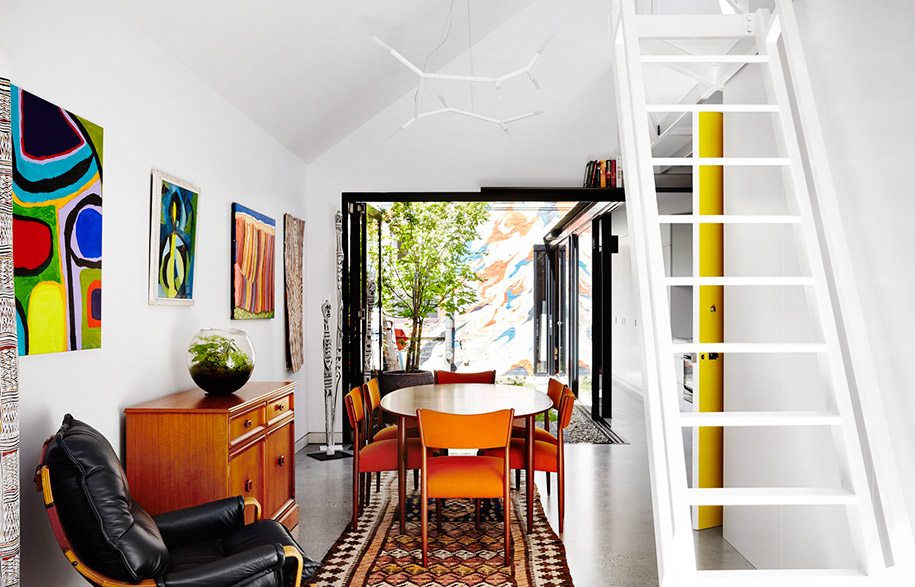
A reconfigured working of a two storey, two-bedroom residence, the Alfred House melds the idea of a courtyard with the existing laneway.
Why do so many residential laneways promote fears or be treated as something to hide from? Austin Maynard Architects took the idea of embracing the laneway for Alfred House as a fun, cool spaces to be played in and used.
Story continues below advertisement
Alfred House back onto this open area, which virtually nobody uses; by opening the doors to the back, the owners extend their property and allow light and air to pour in.
The design process led to the installation of an internal garden, a kitchen laundry, living dining room, bathroom, mezzanine office and storeroom garage. The floor level of the rear addition is sunken to a depth of 600 millimetres from the height of the laneway, which means a generous internal height and uncompromised internal volume while reducing the height of the building externally.
Alfred House was an exercise in fine-tuning for the design team at Austin Maynard, working to a tight and constrained budget. From the doors in the kitchen coming together without the use of a central column, the deceptive mirror splash back, and the employment of perforated steel to filter light to the way the back glass window opens up completely without a fixed panel, the house is an effortless looking design statement.
Story continues below advertisement
North-facing glass and perforated metal awnings enable passive solar gain in a house where sustainability is key. This is furthered with active management of shade and passive ventilation.
Austin Manard Architects
maynardarchitects.com
Story continues below advertisement
Photography by Tess Kelly.


